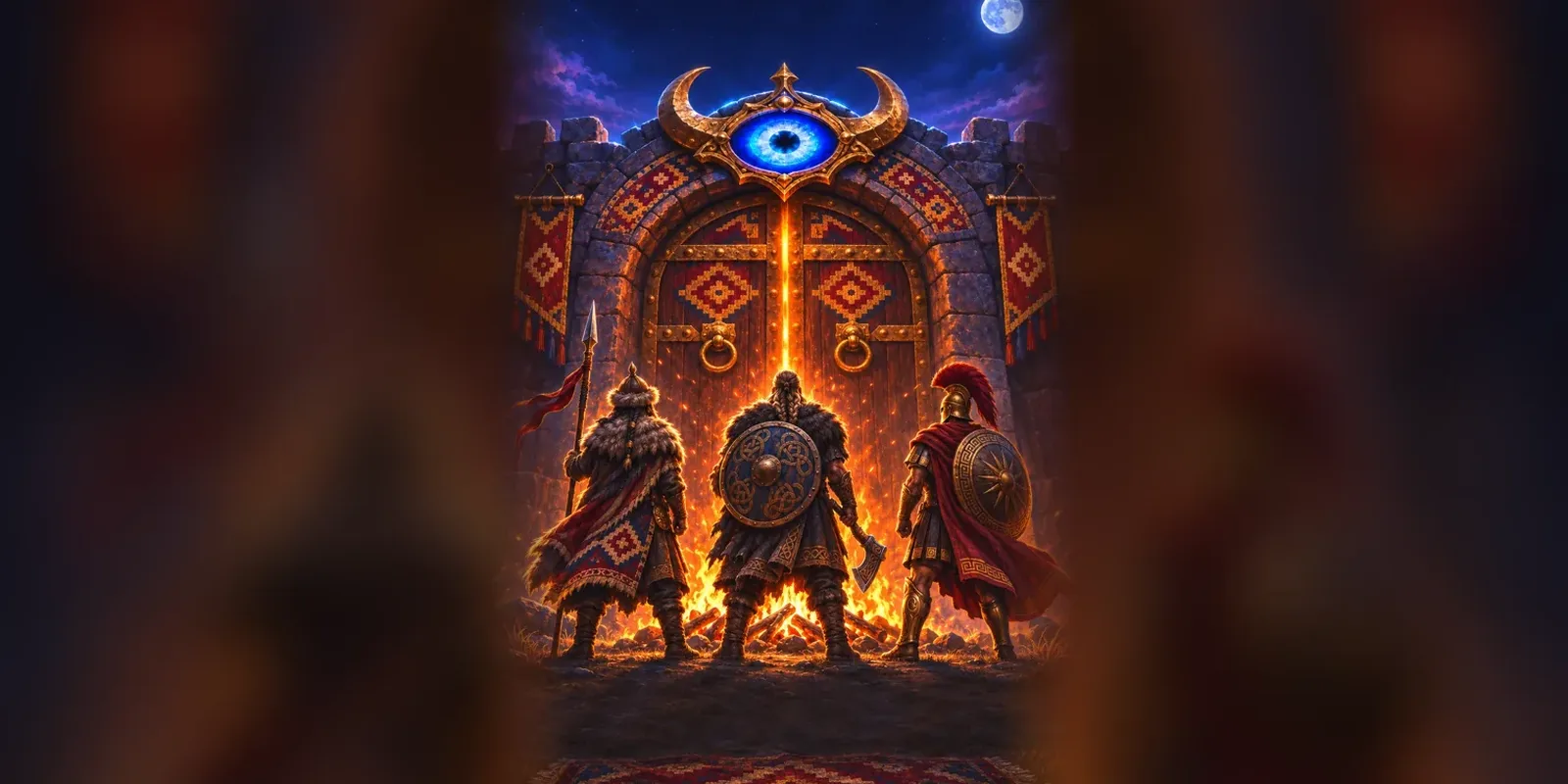
Something always notices. You hold the camp with a deck drawn from three old peoples, the archers of the steppe, the reavers of the north and the hoplites of the coast, against the creatures of their own myths. Fights are short, the road never ends, and each people has its own word: mix them, play them in the right order, and a weak card hits hard.
01The Road of the Steppe, against Körmös.
02The Road of the North, against a Draugr.
The call the research made
I started from Marvel Snap, Pokémon TCG Pocket and Hearthstone, and the research talked me out of all three. A census of 218 card games on Google Play and a read of 37,544 store reviews said the same thing: free player-versus-player card games pay only with a famous brand behind them, and the one shape where a single developer has won is a paid, single-player game like Balatro.
So Hold the Gate is a roguelike deckbuilder you can play in one hand. The reviews also wrote its rules: players hated paying for winning cards and losing their progress, so there are no packs and no power for sale. The Road of the Steppe is free to keep, one $3.99 Unlock opens every other road, now and later, and there are no ads. There is no account either: progress stays on the phone.
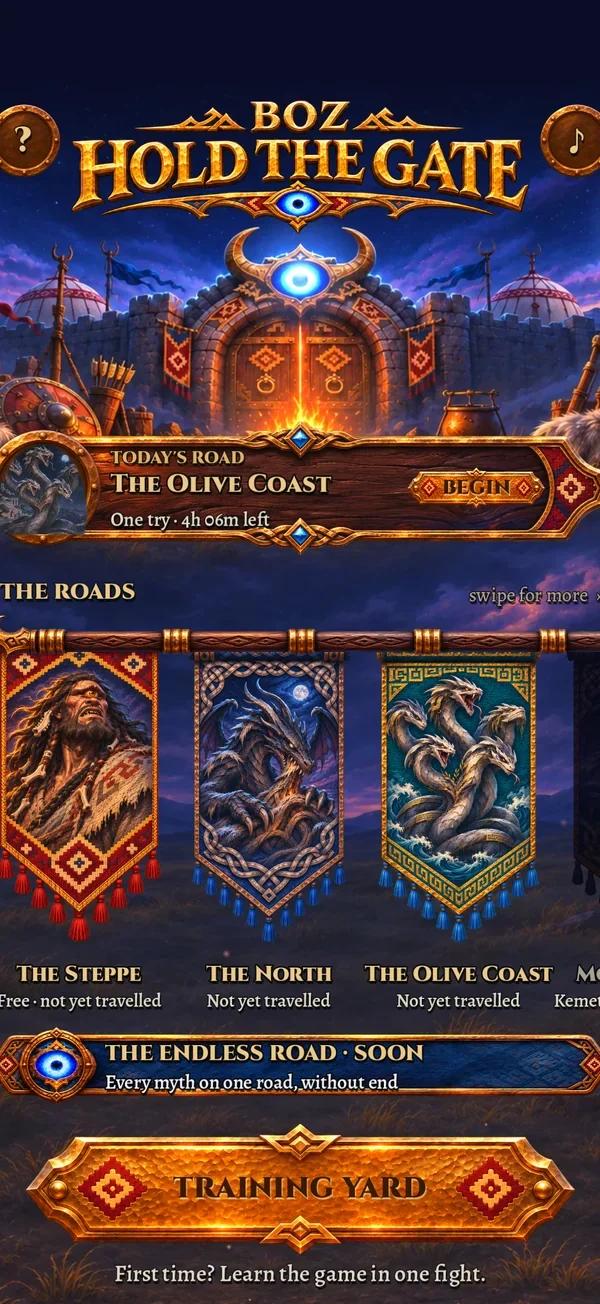
01Choose a road. Today's road is the same for everyone.
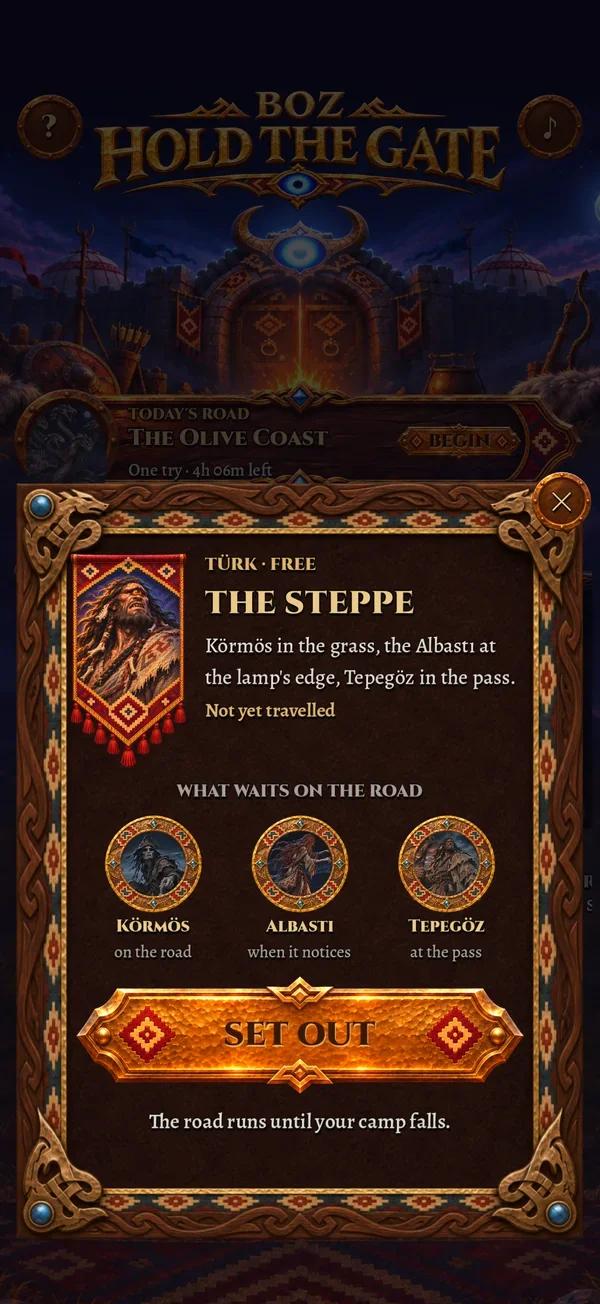
02Each road shows what waits on it. The Steppe is free.
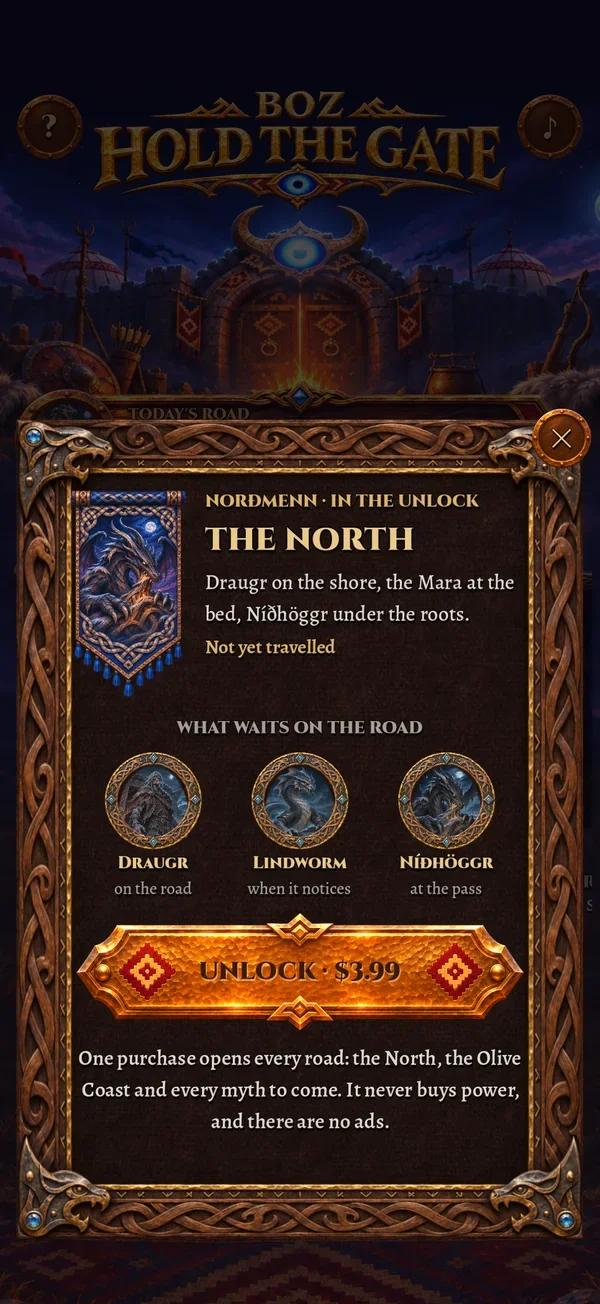
03One $3.99 Unlock opens every other road.
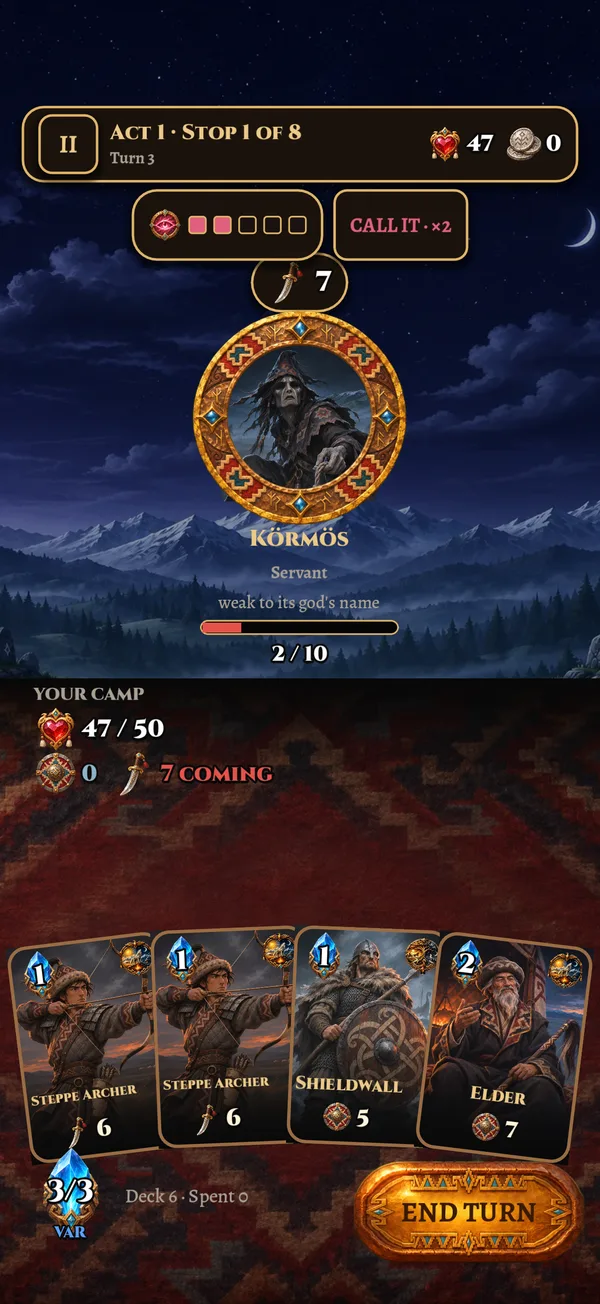
04The fight. The Hollow shows what it will do next.
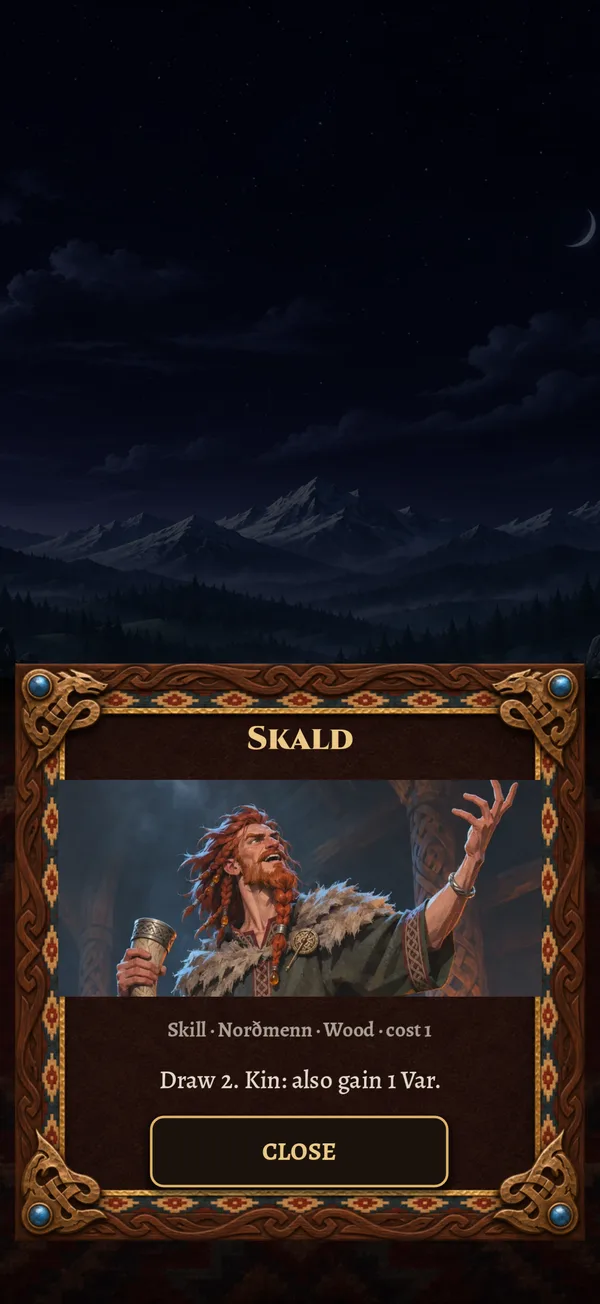
05Hold any card to read it, in plain words.
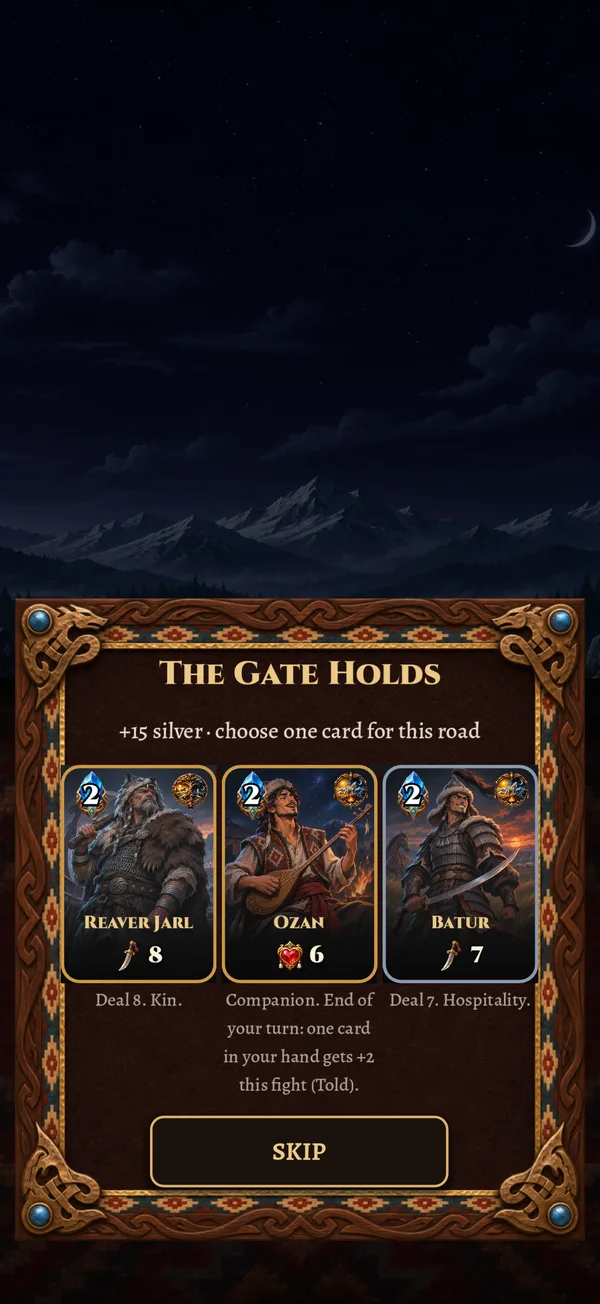
06Win, and choose one card for this road.
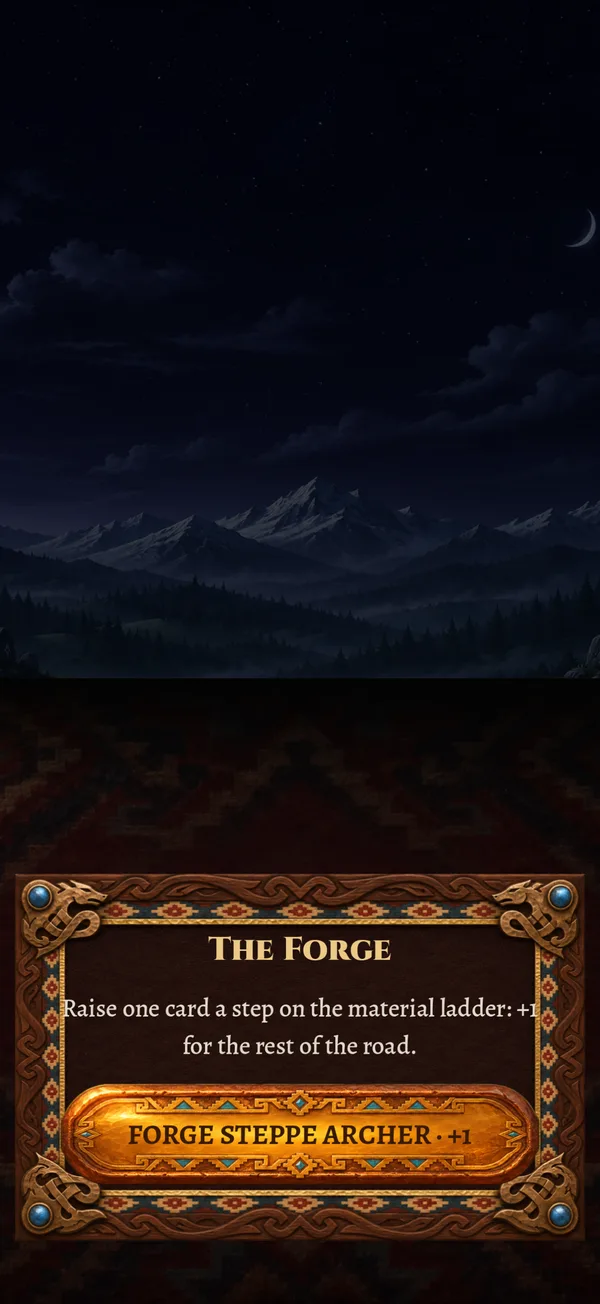
07The forge raises a card for the rest of the road.
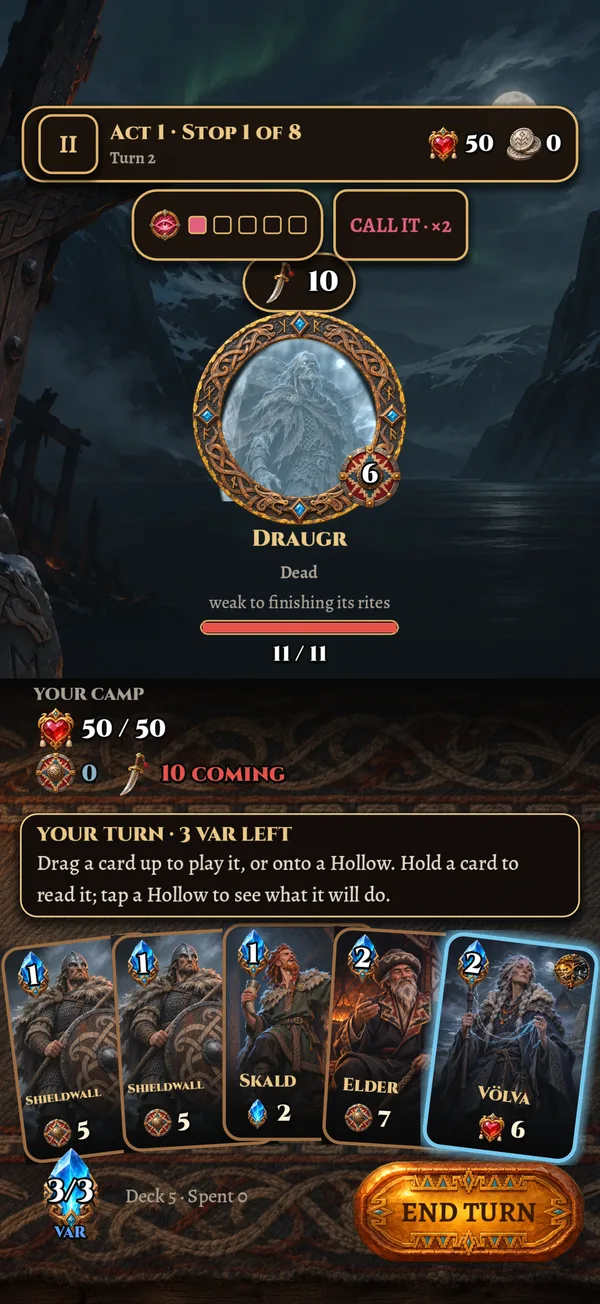
08The North wears knotwork; the Steppe, kilim.
The art
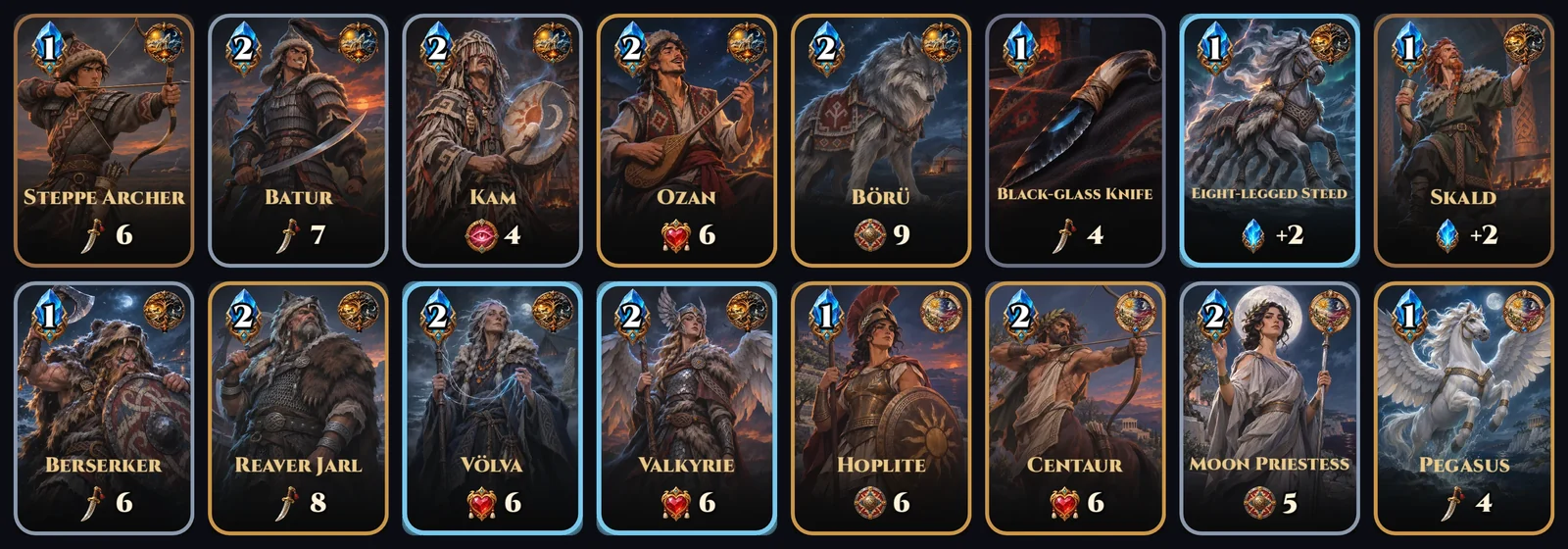
I made every illustration with gen AI, and the work was in the direction, not the generation. Each image starts from a shared rules block (card framing, a quiet lower third for the text, no lettering) and a prompt per card, then goes round until it is right for the people it comes from. The Albastı took three versions before her feet pointed backward, as the folklore says. Tepegöz has one eye in his brow. The runes on the northern cards are deliberately abstract rather than fake. Each road wears its own people's craft: kilim on the Steppe, knotwork in the North, meander and marble on the Coast.

Where it stands
It is in development, built in Godot for phones, with store releases on iPhone and Android still to come. As of November 2026 there are 27 painted cards, 21 Hollow from three myths, three endless roads, a daily road everyone shares, and a guided Training Yard for players new to card games. Under the screen, the fight rules replay identically from a seed, and three bot play styles run 300 roads each to keep the balance honest. The sounds are generated too.
It started out as Boz Cards, and is set in BozUniverse, the fantasy world it borrows its peoples and creatures from.